




















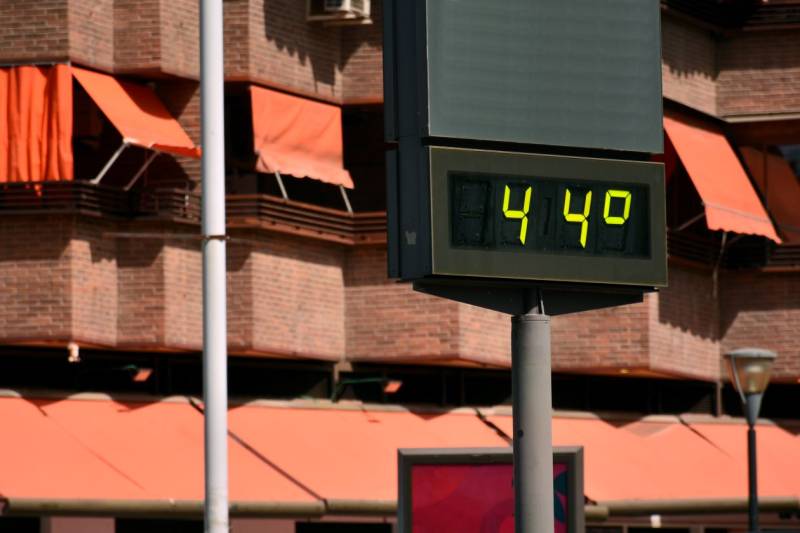
Murcia was right at the heart of Spain's extraordinary summer, with temperatures reaching 44.2°C on July 23 as the country recorded its hottest summer in at least 157 years.
The figure recorded in Murcia was the highest maximum temperature measured at one of Spain's main weather stations during the June to August period. Alcantarilla also saw the mercury climb to 43.9°C on August 15, putting the Region firmly among the areas to experience some of the most intense heat of the summer.
And it wasn't just the temperatures that made this summer unusual. According to the State Meteorological Agency, AEMET, conditions more typical of summer stretched from the second half of May through to mid-September.
In fact, Spain experienced four heatwaves during the summer, followed by another five-day heatwave between September 2 and September 7. The longest summer heatwave lasted 24 days, from July 28 to August 20, and at its peak affected up to 32 provinces.
Across mainland Spain, the average summer temperature was 24.5°C, which was 2.4°C above the 1991-2020 average. That was enough to beat the previous record, set only last year, by 0.3°C.
AEMET's official records go back to 1961, but climatologists have reconstructed data reaching back to 1869. That longer record also places summer 2026 at the top, making it the hottest in at least 157 years.
July was particularly hot and the hottest month in the historical record, while June was the second hottest and August ranked sixth.
Rainfall was also well below normal. Mainland Spain received an average of just 39.6 litres per square metre during the summer, around 56% of the usual amount. It was the country's third driest summer since records began in 1961.
So what can we expect next? AEMET says there is a 60% to 70% chance that September, October and November will be warmer than normal across Spain. But there is more hopeful news on the rain front, with a greater chance of wetter-than-normal conditions in parts of northern, central, and western Spain during the final three months of the year. This corner of Spain, it seems, can expect more of the same.
Image: Archive
Sign up for the Spanish News Today Editors Roundup Weekly Bulletin and get an email with all the week’s news straight to your inbox
Special offer: Subscribe now for 25% off (36.95 euros for 48 Bulletins)
Read some of our recent bulletins:
Discount Special Offer subscription:
36.95€ for 48 Editor’s Weekly News Roundup bulletins!
Please CLICK THE BUTTON to subscribe.
(List price 3 months 12 Bulletins)